


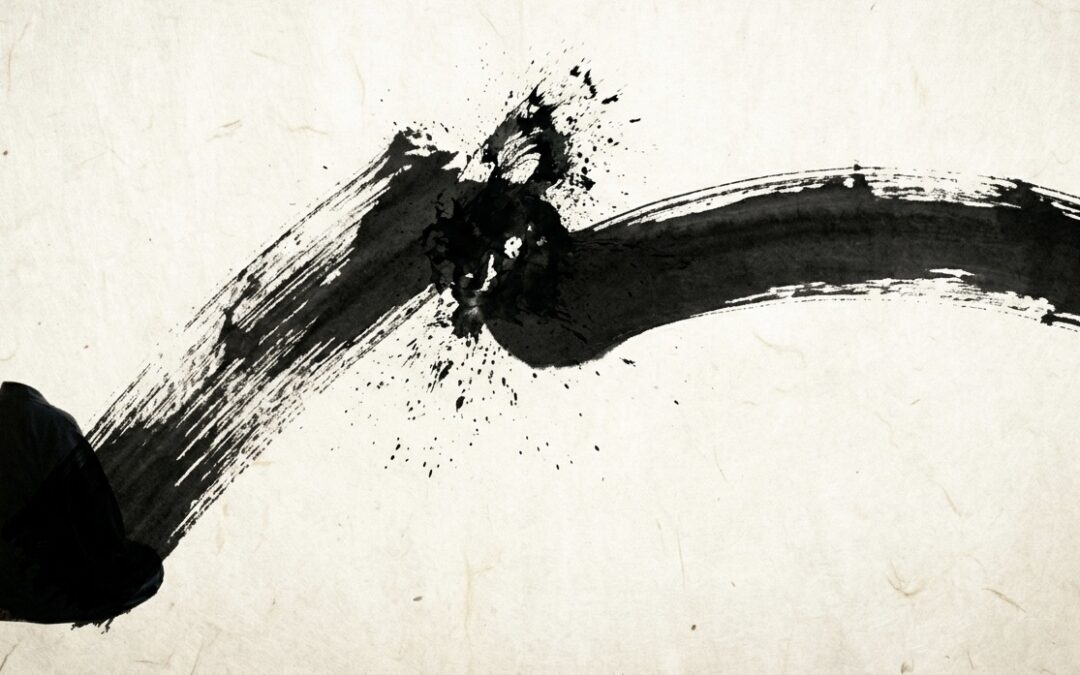
In Japanese philosophy, there is a fascinating concept: Mushin (無心)
Literally translated as “empty mind.”
It is not a state of intellectual emptiness or stupidity, but rather one of total presence, openness to the winds of life, and a fluid, spontaneous response to what is.
(Read “Emptiness, full of beings”)
I met Kyoko Kishi ten years ago. She is the widow of Kishi Akinubu, Masunaga’s assistant and the founder of Sei-ki Soho. Her treatments and the practices she introduced bypassed my mind, and we also had many conversations.
Being fully open to what is happening, here and now—that is the state of mind I seek.
Mushin no Shin, the Origin
Historically, the concept comes from Zen and the martial arts.
The original term is Mushin no shin, the mind of no-mind.
It is a state of total mind-body unity. In some cases, we speak of congruence—the perfect coherence between body, mind, and emotions—that is, a perfect alignment between what a person feels, thinks, says, and does.
However, in our society, we lose this state because the mind takes precedence over the body, and emotions are either suppressed or run wild.
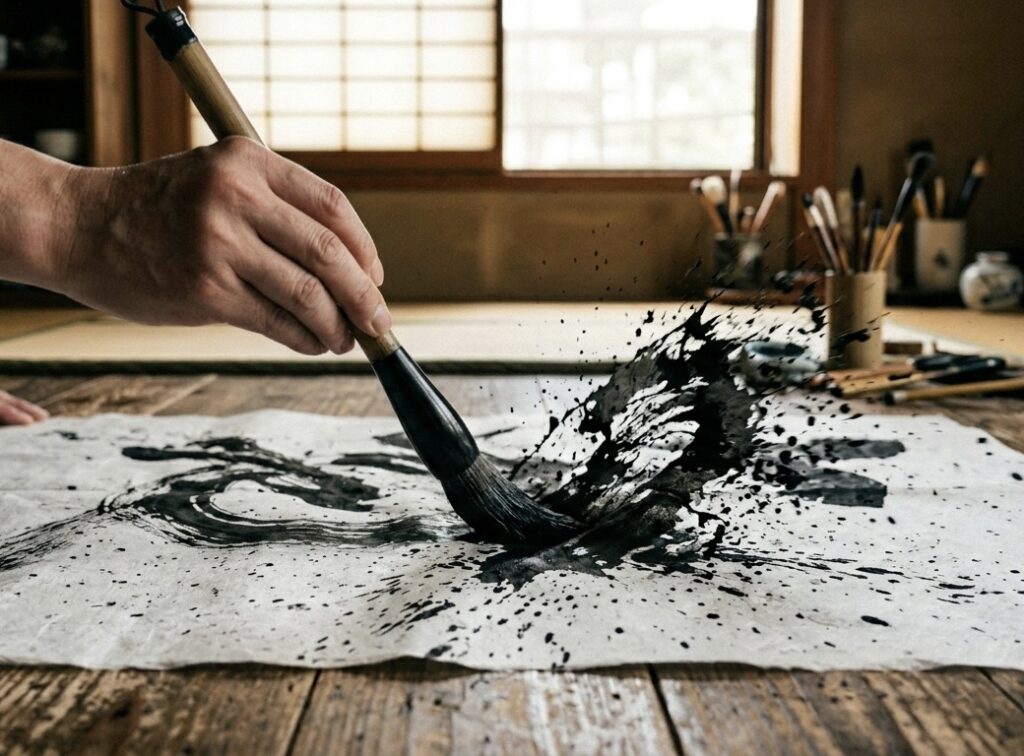
Mushin no shin is a constant quest in the art of practice, whether in shiatsu, painting, meditation, martial arts, and so on.
Perhaps that is what it means to embark on the path.
Mushin is the moment when the practitioner stops “thinking” about their technique.
It is the moment when it happens.
The ego steps aside, the movement unfolds, without fear of failure or desire to succeed.
Thus, with the mind no longer burdened by analysis, the action flows smoothly and spontaneously because “it is simply there.”
In daily life, this means stopping being distracted by our inner dialogue and our own judgments; it means doing what is right in the moment without worrying about what comes next; it means letting things happen without forcing the outcome.
Various symbols are associated with this concept:
The mirror, because it perfectly reflects whatever passes before it without holding anything back. Mushin works the same way: the mind perceives everything, but clings to nothing.
Water, because just as water flows around a rock without stopping, the mind adapts instantly to the situation without resistance.
A Goal Without a Goal
The moment we try to understand mushin, it vanishes.
It is there by nature, but the moment I seek it, it disappears.
Thought erases its presence.
The main obstacle to mushin is therefore our own mind.
This may seem paradoxical: the more we seek it, the more it hides; the less we think about it, the more present it is.
It is a state of total fluidity, of presence that eliminates the time between thought and action.
While it’s impossible to force our minds to be empty, we can still create the right conditions for it.
This is a form of training that starts with the body and extends to the mind.
This is what I call a “bottom-up” approach, whereas we’re used to a “top-down” approach (training the mind to make the body react).
How do you do it?
Certain methods have been developed to help one move toward mushin:
- Shu-ha-ri, technical mastery, mastery of the movement: you no longer need to think about the movement; the action happens without needing to think about it. This is achieved through repeating the movement a very large number of times (called tanren, repetition).
- Kokyu, breath control: breathing is the bridge between the body and the mind. This can be achieved through abdominal breathing exercises and long exhalations, among other methods.
- Zazen, seated meditation: simply sitting, observing the body and thoughts without clinging to them. One metaphor is to let the clouds pass by: our thoughts are symbolized by clouds. We do not hold them back, nor do we push them away. They simply pass through our inner sky. With practice, the gaps between the clouds grow wider, and the blue sky comes into view.
- The transitional rituals that mark the difference between ordinary time and the special time of practice. These may include preparing the materials or the space, lighting incense, or the bow (rei). It is a form of psychological separation. We leave our worries behind.
- Enzu no metsuke, peripheral vision: it is seeing rather than looking, or even perceiving rather than seeing. It is as if our gaze were drifting toward the horizon to take in the landscape.
In summary
Mushin is a state of mind unburdened by doubt, fear, or ego (without being rigid or thoughtless).
If you overthink, you slow down. If you’re afraid, you freeze up and lose your composure. If your mind is clear, the answer is right there.
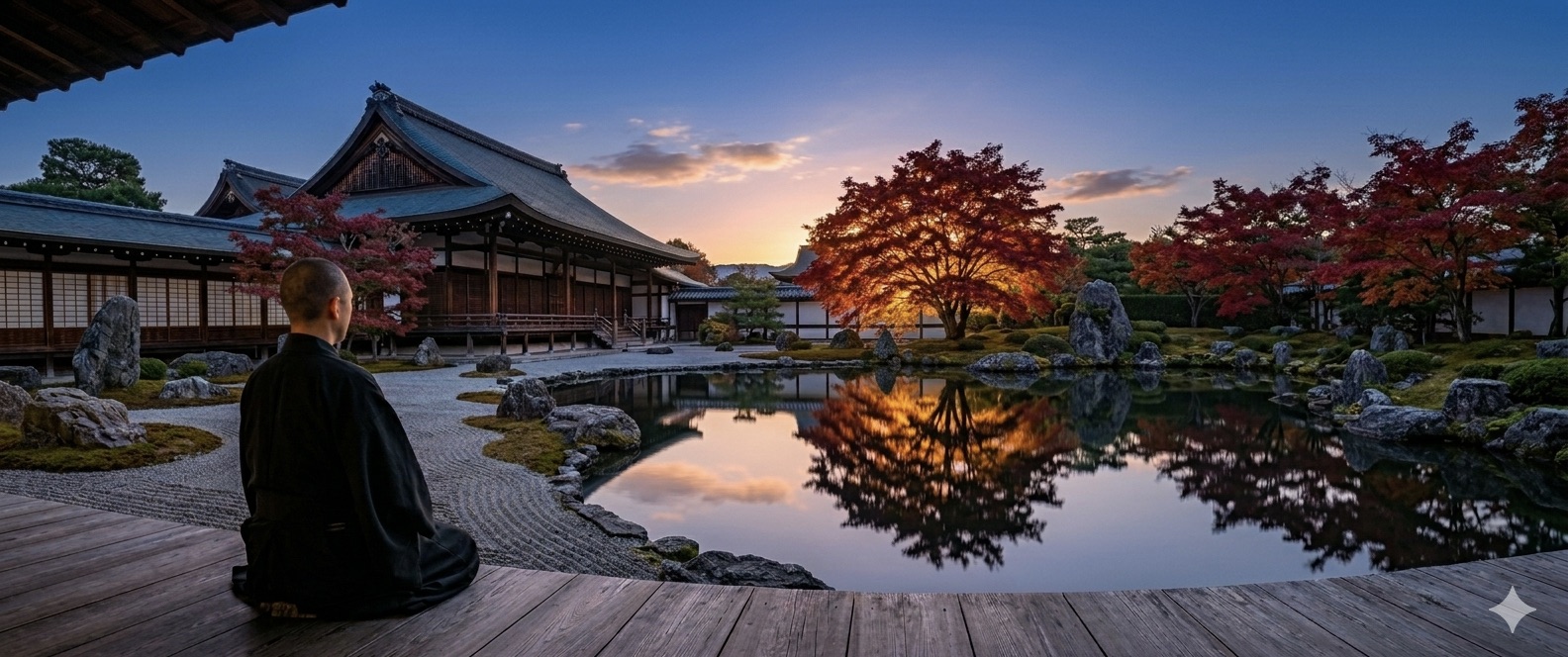
It is like a lake that, when undisturbed by the wind, perfectly reflects the landscape around it. Mushin is the same: when our mind is clear, it brings about perfect harmony.
Mushin cannot be understood or learned. It is the experience of practice that strengthens it and helps it emerge. It is constant training in daily life. It is surrendering to life.
(read Moment, present… ichi e, ichi go“)
The sky is growing bluer and bluer.
Know nothing,
Want nothing,
Expect nothing.
Recent Comments